

everything I learned about trying to get pregnant
this is what women aren't telling you, but should
I wrote this post out a few months ago when I was in the thick of trying to conceive (TTC) because I needed a place to document my troves of research. My entire identity is being an overthinker & over-researcher. I talked to dozens of fertility experts, read every first hand account about secondary infertility on reddit, tiktok, instagram, YouTube, and most importantly talked to every woman I know about their TTC experience. Everyone’s was wildly different, but after months of data points, some common threads emerged. IThis post is about my experience with what worked, what didn't work, and what I absolutely recommend to every woman.
Because of the nature of my job, almost daily women were asking me what to do, what to avoid, and what I did to get pregnant. In truth, with my first, I didn’t have a good answer for them. Now, I do.
Even if you aren’t in this stage of life, I hope that you find this insight meaningful. I truly believe that women are the largest source of knowledge transfer and the more we talk about taboo things, the more informed we are to make decisions that are best for ourselves and our families.

In this column you’ll find:
📲 the amazon Dyson attachment over 1806 of you bought
🧪 the tests that are recommended by real doctors
💊 supplements, foods & small habits that made a difference for me
🩺 how I tracked ovulation without losing my mind
💬 unfiltered reality of my own TTC journey

⬆️ This week’s highs: Things have been busy in a really good way. My daughter starts “real school” next month and I can’t believe we will be on a proper school schedule. I’m hoping this is a good change for her, but damn I’ll miss daycare hours
⬇️ This week’s lows: Its the week before a trip so naturally, im running around like a headless chicken. I have been putting off a lot of my girl maintenance (nails, hair, facials, threading, etc) because I’ve been dedicating my few self care hours to rehabbing my body with PT, 2x chiropractic care, doing dry needling, cupping, etc. This week I’m not getting my hair cut, but I am taking my daughter so there’s that

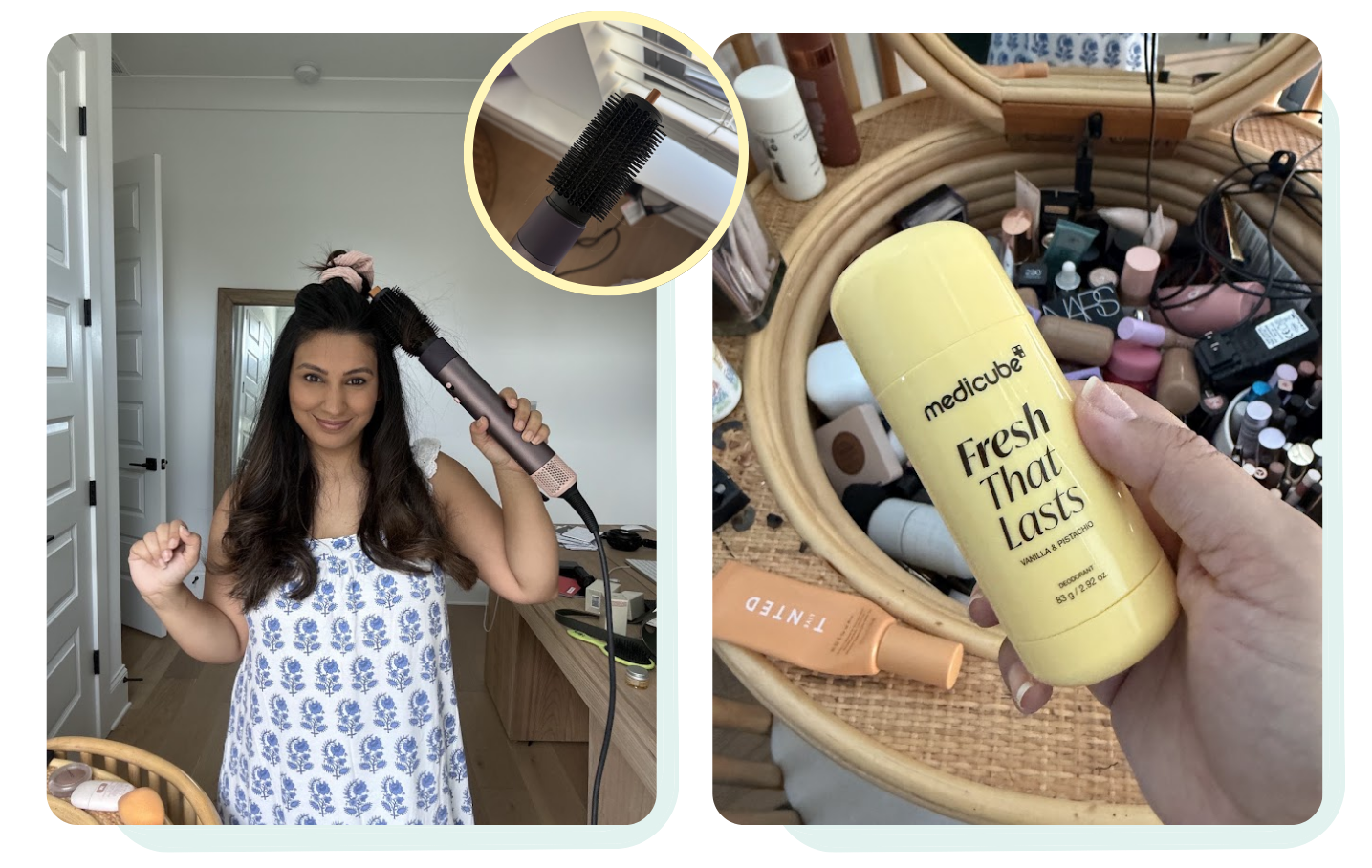
I shared that got this attachment for my Dyson from amz & almost TWO THOUSAND of you bought it right away. I *love* how my blowouts turnout with it. I’ve tested a few versions, and this size is by far my FAVORITE. It’s such a steal and my hair doesn’t get caught the same way that it does in the regular brush that comes with the Dyson! Best little $30 I’ve ever spent
I’ve been doing a lot of research about aluminum free deodorant and this one has been so good to me. I have discoloration and this hits both. It goes on clear without feeling sticky or leaving white marks all over your clothes and the vanilla pistachio scent smells like something you would buy at Sephora but it’s affordable
If this felt like a group chat you actually enjoy reading, can you tap the heart ❤️ it helps this post find more of it’s people
My TTC Journey
I’ve always been an extremely research driven person. And after I announced my first pregnancy I got so many questions about what I did when trying to conceive.
Being younger, four years younger than I am now, it was a lot easier. We didn’t “try” in the intense, charting, thermometer way. We just… tried. (once) and I got pregnant the first time.
That pregnancy ended in an early miscarriage. We decided to take a break after that. Six months later we tried again andddd I thought I was outside of my so called fertility window that my trusty app on my phone told me I was in… but that first time, we got pregnant again.
Back then, I didn’t truly understand the pitfalls of trying to conceive or how difficult it can be physically, mentally & emotionally: specifically for women. This time around, I have a newfound appreciation for the journey that women go through in order to try to conceive.
While my timeline is not nearly as long as a lot of other women’s, it was long enough for my husband and me to have a real conversation about: would we be okay with one child?
His immediate thought was “yes!” He said it would be completely fine for us to just raise our daughter and be happy with our lives and not go through the enormous strain mentally, physically, emotionally, and financially of exploring IVF or other treatments. Of course, that made total sense.
I, on the other hand, wasn’t ready to make that commitment out loud. Can I solumly swear at this moment in time that I will forever be okay with not giving my child a sibling? Can’t confirm. I said that after a couple of months, we’d see where we were at. We gave ourselves a date in the sand, and said we’d push to see a fertility specialist after that point.
I ended up getting pregnant the month before that self proclaimed deadline. But here are the things I did when trying to conceive.
understanding how things work
Trying to conceive is extremely difficult. It puts a lot of pressure on the woman. And while men will say it’s stressful for them too, I can’t help but roll my eyes laugh a little. Yes, it takes two people, but manufacturing romance on command? Let’s just say that part’s not easy for either side.
But what matters more than anything is understanding the mechanics of your body
There are only 12 to 48 hours in which an egg can be fertilized every month
Sperm can live in your body for several days, which is why the time leading up to ovulation is usually more important than the time after
Almost everyone has a 10 to 14 day window after ovulation (known as the luteal phase) where your egg either “sticks” or your uterine lining starts to shed (aka your period)
I found out that I have a shorter luteal phase: closer to 10 or 11 days, which could explain why I had early miscarriages. Anything between eight to ten days is considered medically short, and that can make it harder for an embryo to implant. That was one thing I had no idea about.
Generally speaking, during your luteal phase, your progesterone levels are rising. Those levels need to be high enough to support implantation. Some women go on progesterone supplements during this time to help, which is something I considered too. I was planning to ask my doctor about this the following month.
why you shouldn’t trust the apps
Period tracking apps are great for getting to know your body, but they’re not perfect. The problem is they base predictions off averages (yes even your self reported averages) and if you just follow those dates blindly, you can miss critical windows.
So yes, the period app can tell you the number of days in your cycle. You can have a 20 day, 28 day, or a 30 day cycle and it will continue to predict that. But doesn’t actually know at what point you ovulate because it doesn’t have that data. You can ovulate in the beginning of that window or at the end. It just traditionally takes 14 days into account. Yikes.
Let’s talk a little bit about your cycle. Day one of your period is actually day one of your cycle and I know it seems like you want to finish your period and then start counting days, but no. Your period will usually last five to seven days and then after that you are in your ovulation window.

Now you can ovulate earlier or you can ovulate laterr, but it’s usually around between day 7 and day 14.
After that, day 14 to day 28 is usually when you’re in your luteal phase and that’s when it either sticks or it doesn’t. And if it doesn’t, your period will start. Now, this is like a traditional 28 cycle. As you know, most people do not have a traditional 28 day cycle.
So that means that you can ovulate anywhere in that window. And that means your days after ovulation are really important because that’s when you can see whether or not your pregnancy will actually stick. So one of the things that I think is really important is that you start to confirm ovulation.
so how do I do that?
There are three main ways to track ovulation, and I personally think combining them gives you the best shot.
1. Basal Body Temperature (BBT)
Your body temperature naturally rises when you ovulate and stays high until your period. Tracking that shift can confirm that ovulation happened.
Back in the olden days, women use a thermometer at the same time each morning and chart their results. Aside from the admin of it, I tried that and found it completely unreliable… different readings depending on how I moved or the time I took my temperature.
Devices like the Oura Ring can track your temperature automatically while you sleep and the minute you wake up it takes your temperature the same way, which makes life much easier.
(More on how that worked for me below)
2. Cervical Mucus (yes, yuck)
Some women track their cervical mucus which apparently becomes clearer and stretchier (like egg whites) before ovulation. Personally, I didn’t find this useful.
3. Ovulation Prediction Kits (OPKs)
OPKs test your urine for a surge in luteinizing hormone (LH), which happens 24–48 hours before ovulation.
I’m not sure why, but this was a bit harder for me to understand off the bat. I’ll share exactly how I used them and how I learned my period/fertility app was two full days off when I go into detail below. But I think this was the biggest key to getting pregnant for me.
If you’re “trying” but you’re only going off an app, you may not be really trying yet.
why I’m sharing this
This is what worked for me. I don’t know if it’s going to be helpful or if it’s even new information for anyone trying to conceive, but I realized after so many conversations with friends: girlfriends, moms, friends who want to be moms, and even friends who don’t want kids right now, that we just don’t talk about this enough.
Girls aren’t taught about their bodies. Women aren’t taught how to plan or not plan for pregnancy. And honestly, the only way this kind of information gets shared is woman to woman.
So, in the spirit of everything I’ve spent a decade of my life building i.e. being transparent, honest, and helpful I wanted to share what I’ve learned.
That being said, a large part of this post will be behind a paywall. Substack’s minimum is $5 a month if you subscribe annually, or $6 if you go month-to-month. The reason I’m doing that is simple: this is very personal information. I want to protect my privacy while still being open with the women who care to read it fully.
If you’re going to take the time to read this, I hope you’ll read it in its entirety. Sharing personal details of my life isn’t something I take lightly. Supporting my work helps me keep creating content like this, where I can be honest and vulnerable while maintaining boundaries.
✨ Behind the paywall: the actual play by play. What I think worked for me. Everything I did from tracking my cycle, testing my hormones, the supplements I took, food changes, how I used the Oura Ring (and what I think about the controversy), honest experience with the viral Mucinex trend, beets, pomegranate juice, acupuncture, and even the mental coping mechanisms that helped me stay sane month after month